
Commercial Fire Suppression Systems: Everything You Need to Know Before Installation
October 20, 2025
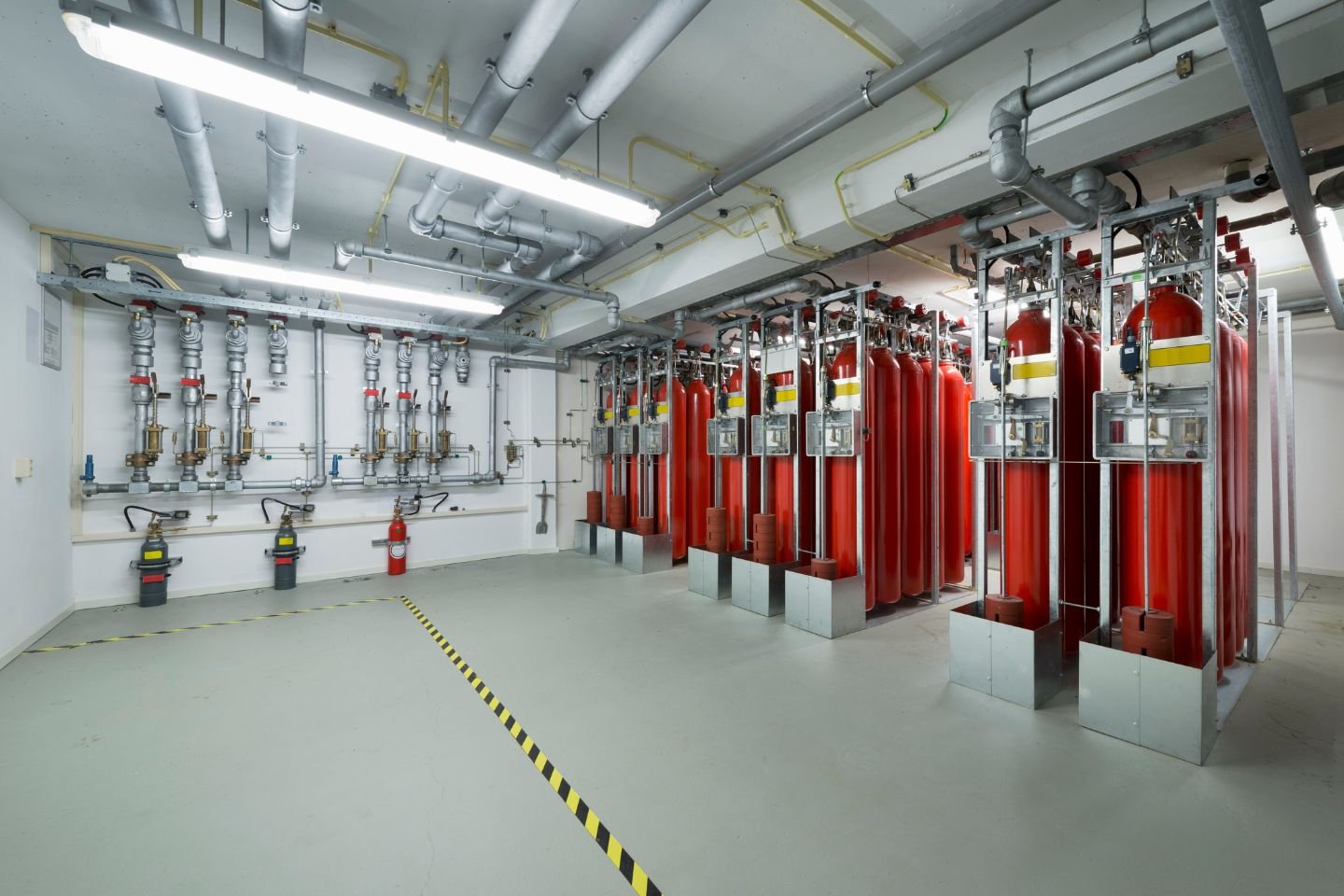
Fire safety is one of the most vital considerations for any business, regardless of its size or industry. A well-designed commercial fire suppression system not only protects property and assets but also safeguards lives, minimizes downtime, and ensures compliance with legal standards. In India, where industries span everything from IT data centers and restaurants to manufacturing plants and warehouses, a one-size-fits-all approach to fire safety simply doesn’t work. Each environment faces different fire risks, and understanding how suppression systems work — and why proper installation matters — can be the key to preventing catastrophic losses.
Unlike basic fire sprinklers that rely on water, a commercial fire suppression system often uses specialized extinguishing agents like foam, CO₂, or clean gases to suppress flames without causing additional damage. These systems are particularly crucial in environments where water-based solutions might harm sensitive equipment or react dangerously with chemicals. For instance, in server rooms, control panels, and laboratories, even a small amount of moisture could lead to electrical failure or contamination. Suppression systems tackle fires quickly, cleanly, and efficiently, making them the preferred choice for mission-critical spaces where continuity is non-negotiable.
Among the most common types used today is the kitchen fire suppression system, which is engineered to detect and extinguish grease or oil fires in restaurants, cafeterias, and industrial kitchens. These systems automatically release a specialized agent that cools the flames and creates a barrier between the fuel and oxygen, preventing re-ignition. For commercial kitchens where open flames, hot surfaces, and oil vapors coexist daily, this technology is indispensable. Beyond restaurants, similar systems are now being adopted in corporate pantries and hotel kitchens, where safety and operational efficiency must go hand in hand.
In larger industrial setups, systems equipped with a water jet monitor provide a high-pressure stream capable of reaching long distances. These monitors can be manually or remotely operated, making them invaluable for large manufacturing plants, storage yards, and refineries. Their advantage lies in versatility — they can control wide-area fires or focus on a specific hotspot, ensuring effective coverage even in expansive facilities. When integrated into a broader commercial fire suppression system, these monitors provide unmatched response power during emergencies.
The process of designing and installing a fire suppression system demands precision and expertise. It begins with a detailed hazard assessment — engineers study the site layout, potential ignition points, material composition, and occupancy density to determine the ideal suppression method. A commercial fire suppression system must be calibrated to the nature of the fire risks it faces; what works for an electronics plant may not suit a food-processing factory. Once the design is finalized, the system’s pipelines, detection sensors, and discharge nozzles are installed strategically to guarantee maximum reach and minimal delay in response time.
Maintenance and testing are equally vital. A system that fails to activate during a crisis is no better than having none at all. Routine inspection ensures that all components — especially gas cylinders, valves, and nozzles — remain operational. Periodic simulations verify that the system activates correctly and the extinguishing agent discharges as expected. Businesses often sign annual service contracts with certified fire safety providers to manage these checks. Keeping a kitchen fire suppression system or any gas-based unit in peak condition requires adherence to inspection schedules, record-keeping, and compliance with local fire authority standards.
Another factor to consider is integration. Modern commercial fire suppression systems are increasingly connected to central alarm panels and building management systems. This integration allows for immediate notification of an emergency, automatic shutdown of ventilation systems, and coordinated evacuation alerts. In high-risk environments, the system can even communicate with local fire departments for rapid response. As businesses embrace smart technologies and automation, fire safety too is evolving into a more intelligent, responsive domain.
When evaluating options, many companies focus solely on cost, but price should never be the deciding factor. The quality of equipment, the experience of the installer, and the suitability of the suppression agent are far more important. Using low-grade components or cutting corners during installation may save money initially but can prove disastrous during an emergency. Professional installation ensures that the water jet monitor, pipelines, and sensors work seamlessly under pressure. It also ensures compliance with fire codes and insurance requirements — both of which are mandatory for legal operation in most commercial spaces.
Businesses that take fire protection seriously often see indirect benefits as well. Employees feel safer, insurers offer better terms, and clients recognize the organization’s commitment to safety and reliability. A comprehensive commercial fire suppression system doesn’t just extinguish fires — it builds trust. It reassures stakeholders that the company values life and security as much as productivity and profit.
In conclusion, installing a commercial fire suppression system is not just about following safety regulations — it’s about foresight and responsibility. It’s about protecting what cannot be replaced: people, reputation, and continuity. Whether it’s a restaurant investing in a kitchen fire suppression system or an industrial unit deploying a water jet monitor, the goal remains the same — swift detection, immediate action, and total protection. In an age where even a few minutes of fire can destroy years of work, there is no better investment than a system that ensures every second counts.